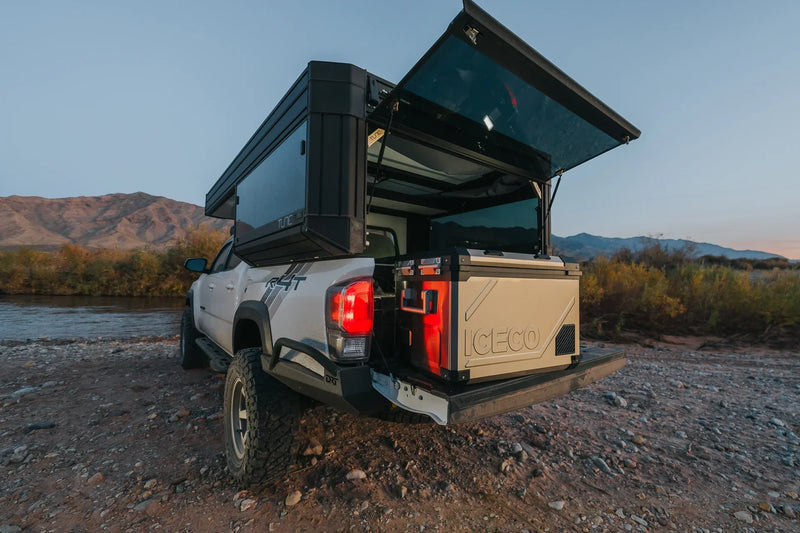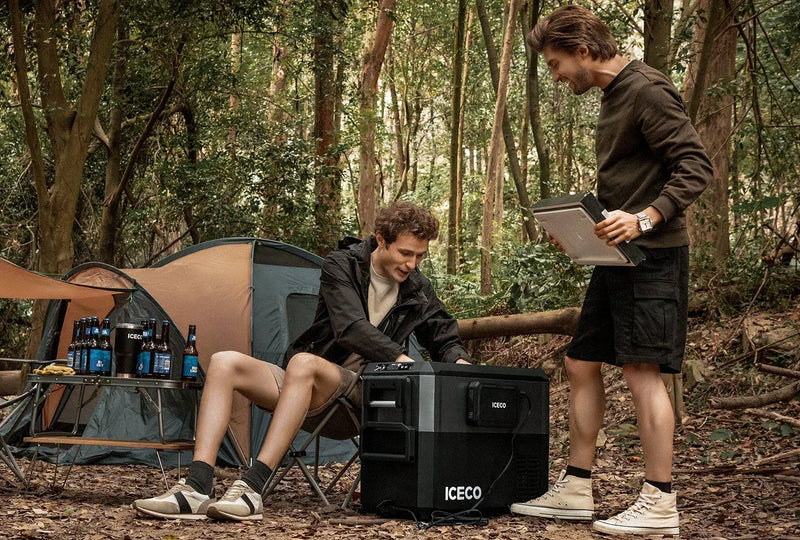
A 12V fridge is the upgrade people wait too long to make. Ice chests are cheap until you price out a summer of bagged ice and soggy sandwiches — and once you've camped with real refrigeration, you don't go back. But the category is confusing from the outside: prices run from $300 to $1,500, spec sheets argue about liters versus quarts, and every brand claims the best compressor. We sell and install these things weekly, so here's the guide we give customers in the showroom.
Compressor or nothing
There are two technologies sold as "car fridges." Thermoelectric coolers use a Peltier element to drop the temperature 30–40°F below ambient — which means on a 95° day, your "fridge" is holding 60°. They're fine for keeping drinks cool on a road trip but don't work very well for anything else.
A compressor fridge works like the one in your kitchen: it holds a set temperature — down to 0°F on most units — regardless of how hot it is outside, and it does it efficiently enough to run overnight on a vehicle battery. Every fridge we carry is compressor-driven. Within that category, the compressor brand matters more than most spec-sheet items: Danish-made SECOP (formerly Danfoss) compressors are the benchmark the industry measures against, and it's worth noting that ICECO builds around SECOP across their lineup and backs it with a 5-year compressor warranty — the same compressor family you'll find in fridges costing hundreds more.
Sizing: buy the trips you actually take
The honest sizing conversation is about days and people, not liters. Rough shop math:
- 20–37QT — solo trips or a couples' weekend; drinks-and-perishables duty alongside a camp box. Fits behind seats and in tight truck-bed builds.
- 40–60QT — the sweet spot. A couple for 4–5 days or a family weekend. This is where most first-time buyers should land, and where the most model competition lives.
- 60QT+ — families, long hauls, base camps, or hunters bringing meat home. Check your cargo dimensions and your back before committing; these run 60+ lbs empty.
One quart of capacity is roughly one day-person of food if you pack deliberately. And remember a fridge doesn't need ice — you get 100% of the listed capacity, which is why a 45QT fridge replaces a 65QT cooler.
Single zone or dual zone
A single-zone unit is one compartment, one temperature — fridge or freezer. A dual-zone splits into two independently controlled compartments so you can run 37° fridge on one side and 0° freezer on the other. Dual zone is the feature people think they need and often don't: if your freezer use is "ice cream on night one," save the money and the internal divider space. If you're keeping meat frozen across a week or hauling game out, dual zone earns its price. The naming usually tells you — in ICECO's VL line, an S suffix is single zone and a D is dual (VL45ProS vs VL45ProD).
Power draw: the spec that actually matters
A compressor fridge cycles — it runs hard to pull down to temperature, then sips power maintaining it. Real-world consumption for a 45QT unit sits around 0.5–1 Ah per hour averaged, depending on ambient heat, how full it is, and how often you open it. That's roughly 12–24Ah per day: comfortably inside a healthy starter battery for one night, and exactly why a dual-battery system is the right long-term answer for anything more. (We build these daily — see our dual battery systems, and watch for our upcoming post measuring real install power draw.)
Two power features worth demanding: multi-stage battery protection that cuts the fridge before it kills your starting battery (ICECO's VL series uses a 3-stage low/mid/high system), and 12/24V DC plus AC input so the same unit works in the truck, the garage, and the hotel room.
Build details that separate the good ones
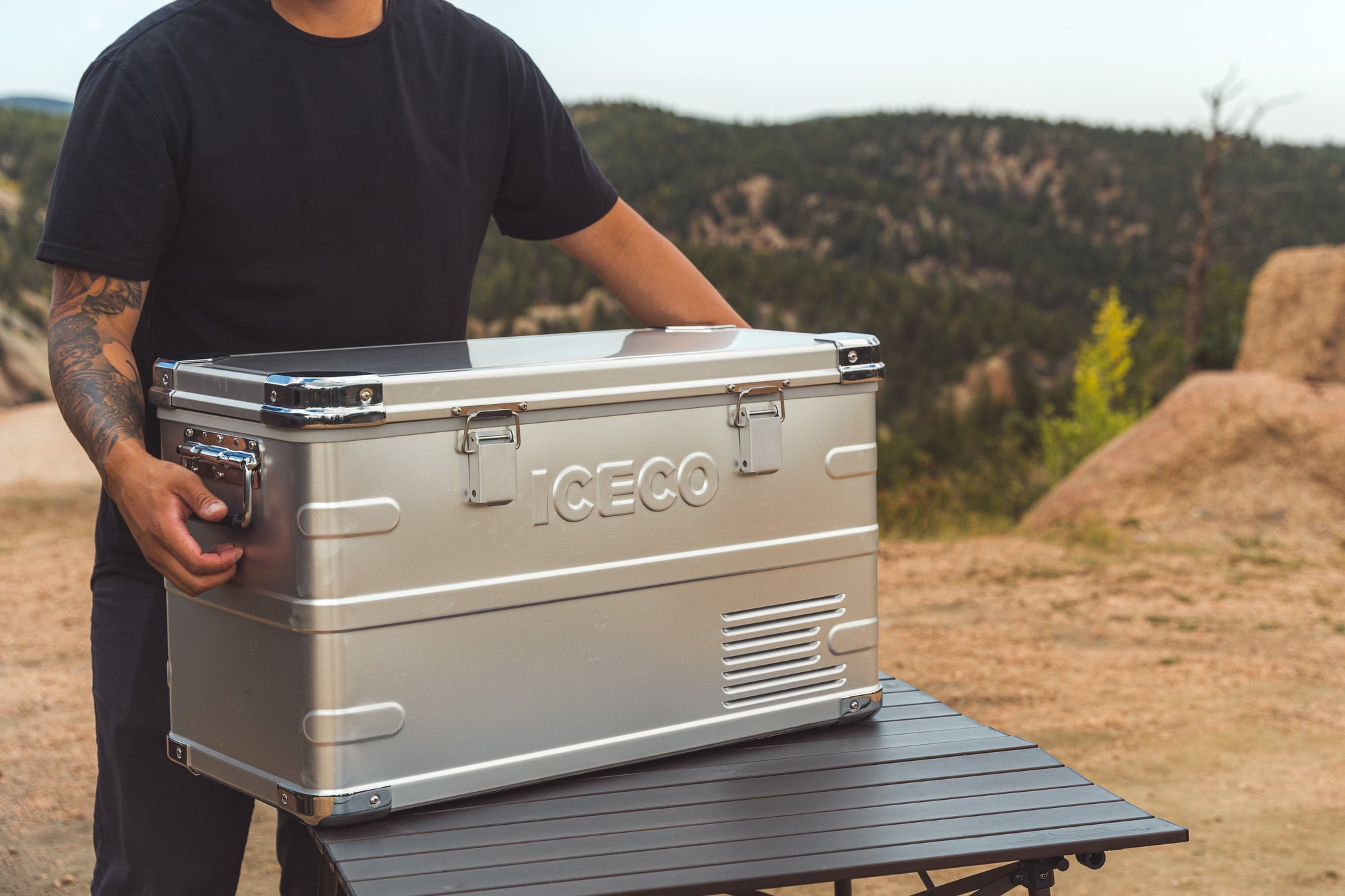
After enough installs you notice what fails and what lasts. Steel or aluminum cabinets shrug off trail abuse that cracks plastic; ICECO's VL line is steel, and their APL line trades to aluminum to save weight. Look for latches that seal firmly (thermal performance is a gasket game), baskets that lift out for cleaning, a drain plug, and a lid that either detaches or opens from the side you can actually reach in your build. Weatherproof control panels matter more than app connectivity — Wi-Fi is a nice-to-have, a dead control pad is a trip-ender.
What should it cost?
The big legacy names — Dometic, ARB, National Luna — earned their reputations, and you'll pay for the badge: name-brand 45QT-class units typically start around $900 and climb well past $1,200 for dual-zone. The value story in the category right now is ICECO: same SECOP compressor architecture, steel construction, and a 5-year compressor warranty at hundreds less — a VL45ProD dual zone runs $799 where competing dual-zones start over $1,200. That price-to-spec gap is why we've been leaning into the brand, and every ICECO ships free from us.
The short version
Buy a compressor fridge, size it 40–60QT unless you know otherwise, skip dual zone unless you'll truly freeze, prioritize the compressor brand, battery protection, and cabinet build over apps, and budget for the power system alongside the fridge. If you want the lineup decoded model by model, start with our ICECO series guide or come see them running in the showroom — we keep them cold year-round.
Questions about matching a fridge to your rig and power setup? Call the shop — this is what we do all day.